
Soups & Stews
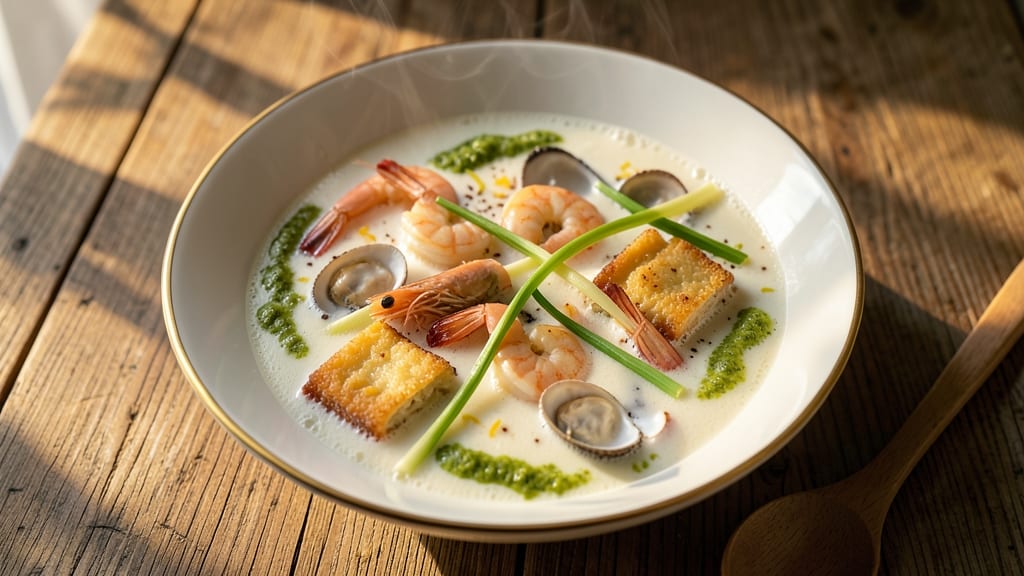
This Singaporean ABC soup recipe brings the aromatic soul of a bustling hawker stall into your kitchen with its fragrant lemongrass and coconut cream velouté. 🌟 The secret lies in the layered flavors—tender prawns, fish cakes, and cockles swimming in a rich, spiced broth infused with tamarind and laksa leaves. I first tasted this dish in a tiny eatery in Chinatown, where the steam rising from the bowl carried me straight to Singapore’s streets.
What sets this recipe apart is the balance of textures and flavors: the creamy coconut broth contrasts with the briny seafood and the subtle heat of chili paste, while the fresh herbs add brightness.
The soup is traditionally served with steamed jasmine rice and lime wedges, creating a harmonious meal that’s both comforting and vibrant. Unlike simpler versions, this recipe captures the depth of authentic Singaporean cooking—where every ingredient plays a role in the symphony of flavors.
By the time you finish simmering the broth and adding the seafood, you’ll have a steaming bowl of soup that’s rich, aromatic, and brimming with the essence of Singapore.
The prawns turn tender, the fish cakes soak up the flavors, and the coconut cream adds a velvety finish that makes each spoonful irresistible. This isn’t just a soup—it’s a taste of tradition, served with the warmth of a home-cooked meal.
The beauty of this recipe is its versatility—whether you’re serving it as a light lunch or a hearty dinner, the flavors adapt effortlessly.
For a vegetarian twist, swap the seafood for tofu and mushrooms, but the soul of the dish remains the same: a fragrant, comforting bowl that tells a story with every bite. Let’s bring this classic to your table.
Ingredients for abc soup recipe singapore
These aromatic ingredients transform your kitchen into a Singaporean hawker stall.
| Ingredient | Amount | Notes |
|---|---|---|
| Lemongrass Stalk 🌿 | 4 whole | Bruised and cut into 2-inch pieces |
| Coconut Cream 🥥 | 1 can (13.5 oz) | Full-fat, not light |
| Prawns 🦐 | 1 lb | Raw, head-on, peeled |
| Fish Cakes 🐟 | 8 whole | Store-bought or homemade |
| Cockles 🦪 | 1 lb | Fresh, scrubbed clean |
| Lemongrass Paste 🌿 | 2 tbsp | Or 1 stalk fresh lemongrass |
| Red Curry Paste 🌶️ | 1 tbsp | Singaporean brand preferred |
| Tamarind Paste 🍋 | 1 tbsp | Or 1 tbsp lime juice |
| Laksa Leaves 🌿 | 1 tbsp | Dried, crushed |
| Chili Paste 🔥 | 1 tbsp | Singaporean sambal oelek |
| Garlic Cloves 🧄 | 4 cloves | Minced |
| Shallots 🧅 | 3 whole | Peeled, sliced |
| Green Chili 🌶️ | 1 whole | Bird's eye, sliced |
| Cilantro 🌿 | ¼ cup | Chopped, for garnish |
| Lime Wedges 🍋 | 2 whole | For serving |
| Jasmine Rice 🍚 | 2 cups | Uncooked, for serving |
| Salt 🧂 | 1 ½ tsp | Adjust to taste |
The heart of this soup is the lemongrass—fresh stalks give the best flavor, but paste works in a pinch. Grab a bunch at an Asian market (they usually sell it whole) or use the paste from a jar. Coconut cream is non-negotiable here—full-fat only, no light versions. The prawns should be raw and head-on for maximum flavor, but peeled if you prefer convenience. Cockles need scrubbing—rinse thoroughly to remove sand. For the fish cakes, store-bought works, but homemade (made with mung bean paste) tastes even better if you're feeling ambitious. The laksa leaves? Find them in the Asian aisle—they're key for that authentic depth of flavor.
No lemongrass paste? Fresh stalks bruised and minced work perfectly. Short on tamarind? Lime juice at 1:1 ratio gets you close. The chili paste can be swapped for sambal oelek if you can't find Singaporean sambal. For seafood swaps, tofu and mushrooms work well for a vegetarian version—just add them at the end to avoid overcooking. The fish cakes can be subbed with shrimp or squid if you prefer. And if you can't find bird's eye chili, jalapeño works in a pinch—just reduce the heat by halving the amount. The cilantro is purely for garnish, so skip it if you're not a fan.
This soup tastes even better the next day—reheat gently with a splash of water to restore creaminess. Keeps in the fridge for 3 days or freeze for 2 months. For serving, steam the jasmine rice separately and squeeze fresh lime over each bowl. The broth reduces as it sits, so add a splash of water before reheating if it's too thick. Make a big batch—this soup is perfect for leftovers, and the flavors deepen overnight.
Why You'll Love This Recipe
- No Chopping Chaos: I swear by this—just crush the lemongrass stalk with the flat side of a knife (no slicing, no fuss) and toss it straight into the pot. The prawns and fish cakes cook in minutes while the soup simmers, so you’re stirring, not stressing.
- Creamy Yet Crisp: That coconut cream makes it velvety, but the fish cakes stay gloriously firm while the prawns turn pink and tender. Honestly, the contrast is what makes it ridiculously good—like a hug in a bowl.
- Leftover Goldmine: Make a big batch on Sunday, and you’ve got lunch for days. The flavors actually deepened after reheating (yes, really), so it’s my go-to for lazy mornings or post-work cravings.
- Budget-Friendly Feast: Fish cakes and cockles stretch this soup into a full meal without breaking the bank. I’ll be real: it’s cheaper than takeout, but way more impressive—plus, the lemongrass makes it taste like a restaurant.
Step-by-step instructions for Singapore lemongrass coconut velout
Here's how to create this fragrant, creamy soup with layers of authentic Singaporean flavors.
🍳 Step 1: Build the Aromatic Base
Heat a large pot over medium heat and add the 4 whole lemongrass stalks (bruised and cut into 2-inch pieces), 4 cloves minced garlic, and 3 sliced shallots. Sauté for 3-4 minutes until the shallots turn translucent and the lemongrass releases its citrusy aroma.
Add the 1 tbsp red curry paste and 1 tbsp chili paste, stirring constantly for 1 minute until the pastes bloom and fill your kitchen with that signature Singaporean heat. This is where the magic happens - the spices need to toast just enough to deepen their flavor without burning. Watch carefully as the pastes darken slightly but don't let them scorch.
Pour in 2 cups water and bring to a gentle boil. Add the 1 tbsp tamarind paste and 1 tbsp crushed laksa leaves, stirring until fully dissolved. The tamarind will give that signature tangy depth while the laksa leaves add their distinctive herbal note. Let this aromatic base simmer for 5 minutes to meld the flavors.
🍳 Step 2: Cook the Seafood
While the base simmers, add the 1 lb prawns and 1 lb scrubbed cockles to the pot. Stir gently to coat them with the spiced liquid. The prawns should turn opaque and the cockles should begin to open within 3-4 minutes. Discard any cockles that don't open - they're not fresh enough to eat.
After 2 minutes, add the 8 fish cakes to the pot. They'll take slightly longer to cook through, so give them 4-5 minutes total. The fish cakes should be heated through and lightly crisped on the edges. Remove the prawns, cockles, and fish cakes with a slotted spoon and set aside, reserving the cooking liquid.
Here's the thing - don't overcook the seafood. Prawns are done when they curl slightly and turn opaque, and cockles should open completely. Overcooking turns them rubbery, which ruins the whole dish. The fish cakes should be warm through but still hold their shape.
🥘 Step 3: Create the Creamy Velout
Return the pot to medium heat and stir in the 2 tbsp lemongrass paste and 1 sliced green chili. Let this cook for 1 minute to release the lemongrass oils. Then pour in the 1 can (13.5 oz) coconut cream, stirring constantly to combine. The soup should immediately become velvety smooth.
Add the reserved cooking liquid (about 1½ cups) and bring to a gentle simmer. Taste and adjust seasoning with the 1.5 tsp salt, adding more if needed. The soup should balance sweet, sour, spicy, and creamy flavors. If it's too thick, add a splash of hot water to reach your desired consistency.
Return all the seafood to the pot and let it warm through for 2 minutes. The prawns should be heated through but still tender, and the fish cakes should be warm in the center. The coconut cream should coat everything beautifully, creating that signature velout texture.
🍽️ Step 4: Serve with Garnishes
Ladle the soup into bowls and garnish immediately with the 0.25 cup chopped cilantro and serve with the 2 lime wedges on the side. The cilantro adds freshness that cuts through the richness, while the lime lets everyone adjust the tang to their preference.
I like to serve this with the 2 cups jasmine rice on the side - it soaks up all the delicious broth. The rice should be hot and fluffy, providing a neutral base that lets the soup's complex flavors shine. Each spoonful should deliver that perfect balance of creamy coconut, spicy heat, tangy tamarind, and fresh seafood.
This soup makes 4 servings, and it's even better the next day as the flavors continue to meld. The coconut cream thickens slightly when chilled, so you might want to add a splash of hot water when reheating to restore that perfect velout consistency.
Pro Tips For Making Abc Soup Recipe Singapore
- Bruise That Lemongrass: Split the stalk lengthwise and pound it with the flat side of your knife before adding it to the pot—this releases the oils and aroma without overpowering the broth. I used to just chop it, and the soup always tasted like it was missing something. Trust me, this is the thing that matters most.
- Simmer Cockles Slow: Drop the cockles in after the prawns and fish cakes have cooked, and let them simmer for a solid 8-10 minutes—no peeking! They need time to purge their grit and soften properly. I learned this the hard way when I rushed them and ended up with a mouthful of sand.
- Save the Coconut Cream: Stir in the coconut cream last, just before serving, and keep the heat on low. High heat will split the cream and turn your soup greasy. Add a splash of water first if it’s too thick—this keeps the texture velvety, not curdled.
- Parboil Prawns First: Give the prawns a quick 2-minute parboil in salted water before adding them to the soup—this locks in their juices and prevents them from turning rubbery. Yes, it’s an extra step, but your future self will thank you when they stay tender instead of tough.
Troubleshooting perfect results
Broth Too Thin?
If your soup ends up too thin, it’s likely because the coconut cream separated or the broth didn’t reduce enough. To fix this, simmer the soup uncovered over low heat for an additional 5-10 minutes to evaporate excess liquid.
For extra creaminess, stir in 1-2 tablespoons of coconut milk powder or whisk in 1 tablespoon of cornstarch mixed with 2 tablespoons of water until thickened. The key is patience—don’t rush the simmering, or the coconut cream will break. 🥥
Seafood Overcooked?
Prawns and cockles are delicate, and overcooking turns them rubbery. If your prawns turn opaque too quickly or cockles stay closed, reduce the heat to low and cook them separately in a small pot with ½ cup water for just 2-3 minutes.
Add them to the soup only at the very end to warm through. Fish cakes should also be added last—they’ll absorb flavors without breaking apart. 🦐
Lemongrass Flavor Weak?
The lemongrass is the soul of this soup, so if it’s underwhelming, you likely didn’t bruise it enough or didn’t simmer long enough. For next time, bruise the stalks by pounding them gently with the side of a knife before slicing.
Also, let the aromatic base simmer for an extra 5 minutes to extract maximum flavor. If you’re short on time, add 1 extra tablespoon of lemongrass paste when building the base. 🌿
Coconut Cream Separating?
This happens when the soup is too hot or stirred too vigorously. To fix it, remove the pot from heat and let it cool slightly. Then, whisk in 1 tablespoon of coconut cream or 1 teaspoon of cornstarch mixed with 2 tablespoons of water to stabilize the emulsion.
For prevention, keep the heat low when adding coconut cream and stir gently. A splash of hot water can also help re-emulsify it if it separates. 🥥
Too Spicy or Sour?
Adjust the balance by adding 1 teaspoon of honey or brown sugar to mellow the heat, or a splash of lime juice to enhance the tang. If the tamarind is too sharp, dilute it with 1 extra tablespoon of water or reduce it to ½ tablespoon next time.
For a smoother finish, stir in 1 teaspoon of fish sauce (a staple in Singaporean cooking) to round out the flavors. 🌶️
Fish Cakes Falling Apart?
Store-bought fish cakes can be fragile, especially if overcooked. To prevent them from disintegrating, add them to the soup only 2 minutes before serving and keep the heat low.
For extra structure, lightly pan-fry them in 1 teaspoon of oil for 1 minute per side before adding to the soup. Homemade fish cakes (made with mung bean paste) hold up better, so consider making your own if this happens often. 🐟
Nutrition facts
Frequently asked questions
What makes this Singaporean soup different from other coconut-based soups?
This recipe captures the authentic Singaporean soul with its lemongrass-coconut velouté and signature ingredients like laksa leaves and tamarind paste. Unlike Thai or Indian coconut soups, it features briny seafood (prawns, cockles, fish cakes) and a balance of sweet, sour, and spicy flavors. The key is the red curry paste and chili paste combination that gives it that distinct Singaporean heat.
Can I make this soup vegetarian?
Swap the prawns and cockles for firm tofu and shiitake mushrooms, and use vegetarian fish cakes (made with mung bean paste). Add the tofu and mushrooms at the end to avoid overcooking. The coconut cream and lemongrass will still shine, though the texture will be slightly different without seafood.
How do I find the key ingredients like laksa leaves and tamarind paste?
Look in the Asian grocery store—laksa leaves are usually sold dried in small packets near curry leaves, while tamarind paste is often in the sauces or pickles aisle. If unavailable, substitute laksa leaves with 1 tsp dried kaffir lime leaves (crushed) and use lime juice instead of tamarind (1:1 ratio). For red curry paste, check the international aisle for Singaporean brands.
Why does my coconut cream separate?
This happens when the soup is too hot or stirred too vigorously. To fix it, remove from heat and whisk in 1 tbsp coconut cream or 1 tsp cornstarch mixed with 2 tbsp water. For prevention, keep heat low when adding coconut cream and stir gently. A splash of hot water can also help re-emulsify it if it separates.
Can I make this soup ahead of time?
Yes! This soup tastes even better the next day. Store in an airtight container in the fridge for 3 days or freeze for 2 months. Reheat gently with a splash of water to restore creaminess. The flavors deepen overnight, making it perfect for meal prep.