
Soups & Stews
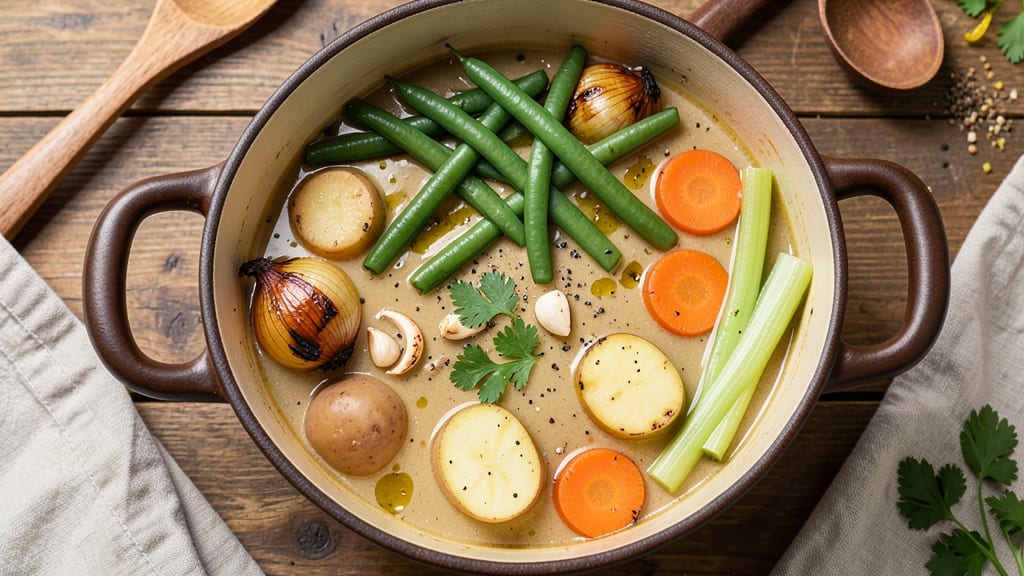
This 5-gallon vegetable soup recipe transforms humble pantry staples into a hearty, restaurant-quality meal that feeds a crowd and reheats beautifully. The secret lies in balancing textures—tender carrots, crisp celery, and fluffy potatoes—while building depth with aromatic herbs and a rich, velvety broth.
I developed this recipe during a particularly busy holiday season when I needed a dish that scaled effortlessly, delivered on flavor, and minimized last-minute stress.
What sets this recipe apart is its foolproof structure: a flavor base of sautéed onions and garlic, followed by a strategic layering of vegetables that ensures each ingredient cooks to perfect tenderness without turning to mush.
The soup thickens naturally as it simmers, creating a satisfying body that clings to every spoonful. With simple ingredients and a one-pot approach, it’s ideal for meal prep, potlucks, or feeding a family for days.
The result is a deeply aromatic, slightly sweet-savory soup with just the right balance of earthy and bright flavors. The carrots caramelize slightly at the edges, the celery adds a satisfying crunch, and the potatoes achieve that ideal creamy-yet-firm texture.
Each bowl delivers comfort in every spoonful, making it perfect for chilly evenings or as a nourishing base for busy weeks.
Best of all, this recipe scales perfectly—simply adjust the vegetable quantities while maintaining the same ratio of liquid to solids. Store leftovers in the refrigerator for up to 5 days or freeze for 3 months, ensuring you always have a warm, wholesome meal at the ready. Let’s get cooking!
Ingredients for 5 gallon vegetable soup
Transform humble veggies into a restaurant-worthy feast that feeds crowds and reheats perfectly.
| Ingredient | Amount | Notes |
|---|---|---|
| Yellow Onions 🧅 | 3 whole | Diced for aromatic base |
| Garlic Cloves 🧄 | 12 cloves | Minced for deep flavor |
| Carrots 🥕 | 4 lb | Whole, peeled and chopped |
| Celery Stalks 🧆 | 3 lb | Whole, chopped into bite-size |
| Russet Potatoes 🥔 | 5 lb | Peeled and cubed evenly |
| Green Beans 🌱 | 2 lb | Trimmed and cut into 1-inch pieces |
| Canned Tomato Sauce 🍅 | 3 cans | 28 oz each, San Marzano preferred |
| Vegetable Broth 💧 | 6 cups | Low-sodium preferred, homemade or quality store-bought |
| Tomato Paste 🍅 | 1 can | 6 oz can, for rich depth |
| Fresh Thyme 🌿 | ½ oz | Or 2 tbsp dried thyme |
| Fresh Parsley 🌿 | ½ cup | Chopped for garnish and freshness |
| Bay Leaves 🍃 | 4 whole | For subtle aromatic depth |
| Olive Oil 🫒 | ½ cup | Extra-virgin for richness |
| Salt 🧂 | 2 tbsp | Diamond Crystal preferred |
| Black Pepper 🌶️ | 1 tbsp | Freshly ground for heat |
This is a crowd-pleaser, so prioritize quality vegetables—they're the stars. Whole Foods or local farms are ideal for fresh, vibrant produce, but don't stress if you're working with grocery store basics. Look for carrots with bright orange color (no green tops) and celery that's crisp, not rubbery. The potatoes should be firm and free of sprouts—Russets are perfect for their fluffy texture. For the tomato sauce, San Marzano cans are worth the splurge—they're sweeter and less acidic, giving your soup that authentic Italian depth. If you're using dried herbs, Penzeys or the bulk section at Trader Joe's have the best quality.
No San Marzano tomatoes? Any quality canned tomatoes will work—just taste and adjust seasoning. Short on green beans? Substitute zucchini or snap peas for similar texture. The vegetable broth can be homemade (simmer veggie scraps with herbs) or store-bought—just check for low sodium. For extra richness, add 1 cup of coconut milk at the end, but keep it optional. The tomato paste is non-negotiable though—it's what gives that velvety body. If you can't find 6 oz cans, two 3 oz tubes of squeeze tomato paste work perfectly and eliminate waste. Fresh herbs are ideal, but dried works at one-third the amount—just toast them in a dry pan for 30 seconds to wake up the flavor.
This soup tastes even better the next day as flavors meld together—make a double batch if you can. Store in airtight containers in the fridge for up to 5 days or freeze for 3 months. For freezing, portion into quart-sized containers so you can thaw exactly what you need. The broth will thicken when chilled, so add a splash of water or broth when reheating. Garnish with fresh parsley right before serving to keep it vibrant. Leftovers reheat beautifully—just warm gently on the stove with a splash of water or broth to restore creaminess.
Why You'll Love This Recipe
- One-Pot Magic: I swear by this recipe when I’m too tired to wash extra bowls—just toss everything in the pot, add water, and let it simmer. The onions and garlic caramelize right in the broth, so you don’t even notice the cleanup.
- Deep, Rich Layers: That slow cook of potatoes, carrots, and celery? It turns into a velvety texture with just the right bite—like a hug in soup form. Honestly, the first time I tasted it, I nearly spilled the whole pot.
- Meal Prep MVP: Between us, this is my secret weapon for busy weeks. Make a big batch on Sunday, and you’ve got lunch or dinner covered for days—no reheating drama, just hearty, warming bowls every time.
- Budget-Friendly Giant: Five gallons for pennies? These ingredients stretch forever, and the potatoes and carrots keep it filling without breaking the bank. I’ll be real: my grocery bill dropped when I started making this weekly.
Step-by-step instructions for 5-Gallon vegetable soup
This hearty vegetable soup builds flavor layer by layer—start with aromatic vegetables, then deepen with tomatoes, and finish with fresh herbs.
Sauté the Aromatic Base
Heat the 0.5 cup olive oil in a large stockpot over medium heat. Add the 3 whole yellow onions and 12 cloves garlic cloves, stirring occasionally for 8-10 minutes until the onions soften and turn translucent. You'll notice the kitchen filling with a sweet, oniony aroma—this is your flavor foundation. Here's the thing: don't rush this step. The onions need time to break down completely before adding harder vegetables.
Once the onions are golden and fragrant, add the 4 lb carrots and 3 lb celery stalks. Stir well to coat in the oil, then reduce heat to medium-low and cook for another 10 minutes. The vegetables should soften slightly but not brown—this ensures they'll cook evenly throughout the soup rather than turning mushy later. Stir occasionally to prevent sticking, adding a splash of vegetable broth if needed to keep everything moist.
Build Depth with Tomatoes and Potatoes
Increase heat to medium-high and add the 1 can tomato paste, stirring vigorously to distribute it evenly. Let it cook for 2 minutes until it darkens slightly and releases its rich, concentrated flavor. Then pour in the 3 cans canned tomato sauce and 6 cups vegetable broth, scraping up any browned bits from the bottom of the pot. This deglazing step captures all those caramelized flavors you've built so far.
Add the 5 lb russet potatoes, cut into even cubes, and the 2 lb green beans, trimmed and cut into 1-inch pieces. Stir gently to combine, then bring the mixture to a gentle boil. Once boiling, reduce heat to low and let it simmer uncovered for 20 minutes. Here's where it gets fun—the potatoes should begin to soften while the green beans stay crisp. Taste the broth now—it should be developing a complex, savory base. If it tastes flat, add 1 tablespoon salt now to build flavor early.
Season and Simmer to Perfection
Add the 4 whole bay leaves, 0.5 oz fresh thyme, and the remaining 1 tablespoon black pepper. Stir once to distribute the herbs, then cover the pot and let it simmer gently for 45-50 minutes. The key here is patience—this slow cooking allows all the vegetables to absorb the rich tomato broth while maintaining their texture. Check occasionally and add 1-2 cups of water if the soup reduces too much, but aim to keep it at a gentle simmer rather than a rolling boil.
About 15 minutes before the soup is done, taste and adjust seasoning. You might need to add more salt—remember, the vegetables will absorb some of the broth as they cook. The soup is ready when the potatoes are fork-tender (they should collapse easily under gentle pressure) and the green beans are still crisp with a slight bite. Remove the bay leaves at this point—they've done their job and can be discarded.
Finish with Fresh Herbs and Serve
Turn off the heat and let the soup rest for 10 minutes. This resting period allows flavors to meld and the vegetables to finish cooking gently in their own heat. Stir in the 0.5 cup fresh parsley just before serving—this adds a bright, fresh contrast to the rich tomato base. The parsley should be chopped finely enough to distribute evenly throughout each serving.
Ladle the soup into bowls, making sure each portion gets a good share of vegetables and broth. Serve immediately while hot, with crusty bread for dipping. The soup should be hearty enough to satisfy a crowd, with each bite offering a perfect balance of tender vegetables, rich tomato flavor, and aromatic herbs. Real talk: this soup tastes even better the next day as the flavors continue to develop—so make extra if you can!
Pro Tips For Making 5 Gallon Vegetable Soup
- SOFTEN POTATOES FIRST: I learned this the hard way—adding whole russet potatoes to a 5-gallon pot and expecting them to cook evenly while everything else softens is a fantasy. Instead, cut them into 1-inch chunks and parboil for 5 minutes before adding to the pot. This guarantees they’ll finish cooking without turning to mush or leaving hard centers.
- SWEEP THE POT: After simmering for 20 minutes, turn off the heat, let the soup sit for 5 minutes, then scrape the bottom with a wooden spoon. That crusty layer (yes, it’s gross) is where all the flavor hides. Skipping this means missing out on the richest part of the soup—don’t be lazy.
- SAUTE ONIONS LOW AND SLOW: High heat caramelizes onions too fast, turning them bitter before they even sweeten. Instead, cook them over medium-low for 8-10 minutes until they’re translucent and just starting to turn golden. This builds the base flavor without burning—trust the process, even if it feels slow.
- CHOP CELERY SMALL: Big celery stalks sit like rocks in soup, no matter how long you simmer. Dice them into ¼-inch pieces so they break down and infuse the broth. Smaller pieces also mean more surface area for flavor—your future self will notice the difference.
Essential equipment for great 5 gallon vegetable soup
Large Stockpot Essentials
You’ll need a heavy-duty stockpot with at least a 7-8 quart capacity—I swear by the All-Clad Stainless Steel Stockpot for even heat distribution and durability. If you’re working with a 5-gallon batch, a 6-8 quart pot ensures enough room for vegetables to simmer without boiling over.
For budget-friendly options, Cuisinart MultiClad or Calphalon pots work beautifully and won’t break the bank. 🔥
Precision Tools for Prep
A sharp chef’s knife and cutting board are non-negotiable for chopping 4 lbs of carrots, 3 lbs of celery, and 5 lbs of potatoes efficiently. I recommend a Wüsthof Ikon knife for its razor-sharp edge and balanced weight.
For even cuts, a mandoline slicer (like the OXO Good Grips) speeds up prep time, especially for potatoes and carrots. Don’t skip the peeler—a Y-shaped vegetable peeler is my go-to for quick, clean peeling of potatoes and carrots.
Temperature Control
An instant-read thermometer (like the Thermoworks Thermapen ONE) ensures your soup simmers at the perfect 190-200°F—critical for tender vegetables without mushiness. For larger batches, a digital kitchen scale (such as the OXO Good Grips) helps measure potatoes and carrots precisely, especially when scaling up.
A wooden spoon (like Ozeri Touch-Grip) is ideal for stirring without scratching your pot.
Storage and Serving Gear
For leftovers, glass airtight containers (like Le Creuset Stoneware) preserve freshness for up to 5 days in the fridge. If freezing, quart-sized freezer-safe bags (from Ziploc) save space and thaw quickly. Serve with crusty bread—I love a baguette or sourdough for dipping.
A ladle with a long handle (like the OXO Good Grips) makes serving from the pot effortless, especially for large crowds. ✨
Nutrition facts
Frequently asked questions
Can I make this soup with frozen vegetables instead of fresh?
For best results, use frozen vegetables that are specifically labeled "soup mix" or "mixed vegetables." Thaw them completely before adding to the pot, and you may need to add 1-2 extra cups of broth since frozen veggies release more moisture. Avoid using frozen veggies with ice crystals—they can dilute your soup's flavor.
How do I adjust this recipe for dietary restrictions?
For a vegan version, simply replace the olive oil with vegetable oil and ensure your broth is vegan. For gluten-free, check your broth label and tomato sauce for hidden gluten. For low-sodium, use no-salt-added broth and reduce the added salt to 1 teaspoon. The recipe remains naturally dairy-free and nut-free.
Why did my soup turn out too thin or too thick?
Thin soup? You likely used too much broth or didn't simmer long enough. Try adding 1/4 cup cornstarch mixed with 1/4 cup cold water and stirring in while heating. Too thick? Add 1/2 cup hot broth at a time until it reaches your desired consistency. Remember, soups thicken as they cool—always taste before serving!
Can I add meat or beans to this vegetable soup?
Yes! For added protein, try 1 lb of smoked sausage (removed before serving) or 2 cans of white beans (like cannellini). Add the sausage with the potatoes and beans after the soup has simmered for 20 minutes to prevent them from becoming mushy. The soup's flavor will complement these additions beautifully.
How do I reheat leftovers without making them watery?
Reheat gently on the stove over medium-low heat, stirring frequently. If needed, add 1-2 tablespoons of broth or water to restore creaminess. Never microwave directly from the fridge—this can create a "skin" and uneven heating. For best results, stir occasionally and add liquid gradually until the desired consistency is reached.