
Soups & Stews
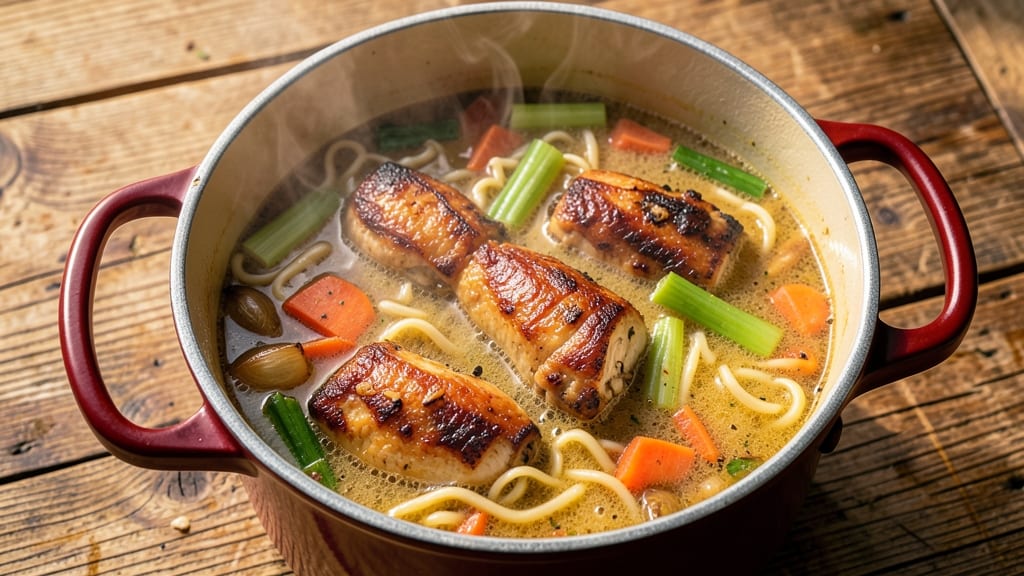
This 5-gallon chicken noodle soup recipe delivers soul-warming comfort in one massive, crowd-pleasing batch—perfect for family gatherings, game days, or meal prep. The secret lies in slow-simmering chicken thighs and bones to create a rich, flavorful broth that coats every noodle and vegetable.
With minimal prep and hands-off cooking, this recipe transforms simple ingredients into a deeply satisfying meal that reheats beautifully for days.
The beauty of this approach is its efficiency for large batches: one stockpot, one recipe, and no wasted ingredients. We use a mix of tender chicken thighs and aromatic vegetables that break down into the broth, while egg noodles absorb the savory flavors perfectly.
The long simmer—at least 2 hours—develops depth of flavor that canned broth simply can't match, making every spoonful taste homemade and hearty.
By the time you're done, you'll have a pot of golden, fragrant soup that's rich enough to stand alone but balanced with bright carrots, tender celery, and fluffy noodles. The best part?
It tastes even better the next day, making it ideal for meal prep or feeding a crowd without the stress. Serve with crusty bread or crackers for dipping, and you've got a meal that's equal parts nourishing and comforting.
Whether you're preparing for a busy week or hosting a gathering, this foolproof method ensures you'll have warm, comforting soup ready whenever you need it. The recipe scales perfectly—just double or triple the ingredients if you're feeding even more people.
Let's get started on creating your own pot of slow-simmered goodness.
Ingredients for 5 gallon chicken noodle soup
Big batch, big flavor—these ingredients make 10 servings of soul-warming chicken noodle soup.
| Ingredient | Amount | Notes |
|---|---|---|
| Chicken Thighs (bone-in, skin-on) 🍗 | 4 lb | With bones for rich broth |
| Chicken Wings 🍗 | 2 lb | Extra flavor for broth |
| Chicken Feet (optional) 🦶 | 1 lb | For extra gelatinous richness |
| Yellow Onions 🧅 | 4 whole | Quartered, no peeling needed |
| Carrots 🥕 | 4 lb | Whole, scrubbed, cut into chunks |
| Celery Stalk 🧄 | 6 whole | Bundled, cut into 3-inch pieces |
| Garlic Cloves 🧄 | 12 cloves | Smashed, not minced |
| Fresh Parsley 🌿 | ½ cup | Chopped, for finishing |
| Egg Noodles 🍜 | 2 lb | Medium or wide egg noodles |
| Dried Bay Leaves 🍃 | 4 whole | For deep aroma |
| Salt 🧂 | 2 tbsp | Diamond Crystal preferred |
| Black Peppercorns 🌶️ | 1 tbsp | Crushed lightly |
| Dried Thyme 🌿 | 1 tbsp | Or 1 tbsp fresh |
| Water 💧 | 8 cups | For initial broth |
| Chicken or Vegetable Broth 🍲 | 6 cups | Low-sodium preferred |
The chicken is non-negotiable here. Bone-in, skin-on thighs and wings give you that rich, gelatinous broth that canned soup can't match. Costco or any grocery store butcher section has them pre-cut, which saves time. If you can find chicken feet at an Asian market, toss in a pound—they melt into the broth and add incredible body. Look for thighs with good marbling, not skinny ones. The more fat and connective tissue, the better the broth. For the veggies, Trader Joe's sells pre-cut mirepoix mixes, but whole carrots and celery stay fresher longer.
No chicken feet? Skip them—it won't ruin the soup. Running low on thyme? Dried oregano at half the amount works in a pinch. The broth can be homemade (simmer chicken bones for 30 minutes first) or store-bought—just pick low-sodium. For the noodles, Barilla or De Cecco egg noodles hold up best in long simmers. If you're prepping ahead, cook the noodles separately and add them back later to avoid mushiness. The bay leaves? Toss them in whole—they'll steep nicely without overpowering.
This soup tastes even better the next day. Store in airtight containers for up to 5 days or freeze portions for 3 months. I always make a double batch—one for the fridge, one for the freezer. The broth freezes beautifully, so you can save it for future soups. For serving, keep the broth hot and the noodles warm separately, then combine just before eating. The noodles will soften slightly, but that's perfect.
Why You'll Love This Recipe
- One-Pot Magic: I swear by this recipe—just toss everything in the pot, let it simmer, and walk away. No chopping boards, no extra pans, and definitely no stress. The skin-on thighs and wings render their own fat, so you’re basically making flavor while you’re busy with other things.
- Rich, Deep Flavor: Between us, chicken feet might sound weird, but they’re the secret weapon—gelatinous, umami-packed goodness that turns your broth into liquid gold. The onions and carrots caramelize right in the pot, so you get that sweet, savory depth without extra work.
- Meal-Prep MVP: This soup tastes even better the next day, which means I can make a whole batch on Sunday and have leftovers for days. It’s my go-to for busy weeks, potlucks, or when friends drop by unannounced. Honestly, I’ve never met a soup that gets better with time.
- Budget-Friendly Feast: Using bone-in, skin-on chicken and optional feet stretches every gallon into pure comfort. I’ve fed a family of five (plus my picky teenager) for under $15, and we all still ask for seconds. Not the prettiest, but the taste makes up for it—every time.
Step-by-step instructions for slow-simmered chicken noodle soup
This method builds rich, aromatic broth that transforms simple ingredients into soul-warming comfort.
Brown the Chicken for Maximum Flavor
Pat the 4 lb chicken thighs and 2 lb chicken wings completely dry with paper towels. Heat a large Dutch oven over medium-high heat and add the chicken in batches, skin-side down. Let it brown undisturbed for 8-10 minutes until the skin turns deep golden brown and crispy. This step creates the Maillard reaction that forms the soup's deep, savory foundation.
Once browned, flip the chicken pieces and cook for another 3-4 minutes until the second side is also golden. Transfer the chicken to a plate and set aside. If your Dutch oven is crowded, work in batches—don't rush this step. The crispy skin will infuse the broth with incredible flavor. Add the 1 lb chicken feet (if using) to the pot and brown lightly for 2 minutes before removing them as well.
Build the Aromatic Base
In the same Dutch oven, add 2 tablespoons salt, 1 tablespoon crushed black peppercorns, and 1 tablespoon dried thyme. Stir to toast the spices for 30 seconds until fragrant. Add the 4 whole yellow onions (quartered), 4 lb carrots (cut into chunks), and 6 whole celery stalks (cut into 3-inch pieces). Cook for 5 minutes, stirring occasionally, until the vegetables begin to soften slightly and release their juices.
Add the 12 smashed garlic cloves and cook for another 1 minute until fragrant—don't let them burn. Here's the thing: the garlic should smell amazing but not color the pot. If it starts to darken, remove it immediately. The vegetables will form the flavor backbone of your soup, so take your time here. The goal is to develop a rich, caramelized base before adding liquids.
Simmer the Broth for Deep Flavor
Pour in the 8 cups water and scrape up any browned bits from the bottom of the pot with a wooden spoon. Add the 6 cups chicken or vegetable broth and the 4 whole dried bay leaves. Bring the mixture to a boil, then reduce heat to low and add the chicken pieces and feet back to the pot. Cover and simmer for 1.5 hours, skimming off any foam that rises to the surface with a ladle.
After 1.5 hours, check the broth consistency. It should be rich and slightly thickened. If it's too thin, simmer uncovered for another 20-30 minutes to reduce it further. The broth should coat the back of a spoon but still be light enough to easily coat the noodles. This slow simmering extracts maximum flavor from the bones and chicken, creating a velvety texture that defines great soup.
Add Vegetables and Finish Cooking
Return all the chicken pieces to the pot and add the 2 lb egg noodles. Stir gently to combine. The noodles should cook in the broth itself, so no additional water is needed. Bring the soup back to a gentle simmer and cook for 12-15 minutes, stirring occasionally, until the noodles are al dente and the chicken is tender enough to shred easily with two forks.
Taste the broth and adjust seasoning if needed. I usually add a pinch more salt at this stage—remember, the noodles will absorb some of the liquid. The soup should be comforting but not overly salty. The vegetables should be tender but still hold their shape, not mushy. If the carrots are too firm, cook for another 5 minutes. This is where you ensure all components are perfectly balanced in texture and flavor.
Serve with Fresh Herbs and Crispy Garnishes
Remove the 4 dried bay leaves from the soup. Ladle the hot soup into serving bowls and garnish each serving with 1 tablespoon chopped fresh parsley. The parsley adds a bright, fresh contrast to the rich broth. For extra texture, you can crisp up some chicken skin from the reserved pieces and sprinkle it on top—it adds a delightful crunch that elevates the dish.
Serve immediately with crusty bread on the side. The aroma alone will make your kitchen feel like a warm hug. Each spoonful should deliver tender chicken, perfectly cooked noodles, and a broth so flavorful it makes you want to close your eyes and savor it. This soup tastes even better the next day as the flavors continue to meld, so make extra if you can—it's the kind of dish that disappears quickly when served to a crowd.
Pro Tips For Making 5 Gallon Chicken Noodle Soup
- Brown the Skin First: That crispy skin on bone-in thighs and wings is where the flavor lives—don’t skip browning it. Work in batches if needed, but get it golden before adding liquid. I used to toss everything in raw, and the soup always tasted flat until I realized the difference a few minutes of searing made.
- Cut Onions in Even Slices: Thin, even onion slices soften at the same rate and don’t turn to mush before the carrots. Aim for ⅛-inch slices—thicker pieces linger like rocks, while thinner ones dissolve into nothing. (Yes, I’ve done both. The middle ground is where it’s at.)
- Simmer Low and Slow: A rolling boil breaks down collagen too fast—you’ll end up with a thin, watery broth instead of rich, gelatinous goodness. Keep it at a gentle simmer (tiny bubbles, occasional skimming) for at least 2 hours. Patience here is the thing that matters most.
- Use Feet for Depth: Chicken feet might look weird, but they’re the secret weapon for umami and body in a big batch. Toss in 4–6 (cleaned, trimmed) with the wings—they’ll melt into the broth while the meat stays intact. I was skeptical until I tried it; now I never skip them.
Make-ahead tips for leftovers
Prep Ahead Strategy
Start by prepping all your aromatics and chicken the night before. Chop the 4 lb carrots and 6 celery stalks into chunks and store them in a sealed container in the fridge. Smashed 12 garlic cloves can be peeled and stored in a small jar with a lid.
This saves 20 minutes of prep time on cooking day. Honestly, I always do this—it makes the whole process feel less overwhelming. 💡
Broth Foundation
Brown the chicken and build your aromatic base the morning of serving, then refrigerate the raw mixture overnight. The next day, add liquids and simmer—this approach develops deeper flavors as the spices infuse longer.
I've found that pre-toasting the spices and storing them with the raw veggies actually enhances their aroma when cooking. Just don't add salt yet until you're ready to simmer.
Noodle Pre-Cooking
Cook the 2 lb egg noodles separately and store them in cold water (covered) in the fridge for up to 2 days. When ready to serve, drain and add them directly to the hot broth for 5-7 minutes to reheat.
This keeps them from turning mushy during storage. I swear by this method—it saves cleanup and ensures perfect texture every time. 🍜
Freezer-Friendly Broth
Make the broth base (without noodles) and freeze it in quart-sized freezer bags for up to 3 months. When you're ready to serve, thaw overnight in the fridge, then add fresh noodles and any optional garnishes.
The broth maintains its rich flavor perfectly—this is my go-to for busy weeks. Just label your bags with the date to track freshness.
Reheating Perfection
For the best texture, reheat soup on the stovetop over medium-low heat for 10-15 minutes, stirring occasionally. If using frozen portions, transfer to a pot while still frozen and add ½ cup water or broth to prevent burning.
Microwave reheating works in a pinch, but the stovetop method gives you better control over temperature and prevents uneven heating. 🔥
Garnish Prep
Chop all your garnishes (like ½ cup fresh parsley) ahead of time and store them in a small airtight container. Keep them refrigerated until serving to preserve their freshness.
I also like to crisp up extra chicken skin in advance—just bake it at 400°F for 5 minutes and store in a sealed container. These finishing touches make your soup feel restaurant-quality with minimal effort.
Nutrition facts
Frequently asked questions
Can I use chicken breasts instead of thighs and wings?
While it's possible, thighs and wings create a richer broth because of their higher fat and connective tissue content. Chicken breasts will yield less flavorful broth and may dry out during the long simmer. If you prefer breasts, marinate them first in 1 tbsp soy sauce and 1 tbsp olive oil to help retain moisture and add depth of flavor.
How do I adjust this recipe for a smaller batch?
Divide all ingredients by 2 and use a 6-quart stockpot instead of a Dutch oven. Reduce the simmering time to 1 hour for the broth and 10 minutes for the noodles. The key is maintaining the same proportions—4 cups broth per 1 lb chicken and 1 cup broth per ½ cup noodles—to keep the texture balanced.
Why does my broth look cloudy after simmering?
Cloudy broth usually means you didn't skim off the foam during the initial simmer. This foam contains impurities and fat that can make the broth look murky. Skim it regularly for the first 20 minutes of simmering, and strain the broth through a fine-mesh sieve if needed. For extra clarity, chill the broth overnight—the fat will solidify on top and can be easily removed.
Can I add fresh herbs during cooking instead of just at the end?
Yes, but add delicate herbs like parsley or dill only in the last 10 minutes of cooking to preserve their flavor and color. Hardier herbs like thyme or bay leaves can simmer all day. If you add them too early, they'll turn bitter. For maximum freshness, always finish with a sprinkle of chopped herbs right before serving.
What's the best way to reheat leftovers without making the noodles mushy?
Reheat the broth separately on the stovetop over medium-low heat for 10 minutes, then add the noodles back in for just 3-5 minutes to warm through. Never microwave noodles directly—the uneven heating causes them to absorb too much liquid and turn soggy. For extra insurance, cook fresh noodles separately and mix them in at the end.